
TurnaroundIQ: helping a ground handler turn aircraft around on time, every time
A ground handling company served airlines at several airports, where every minute of an aircraft turnaround counts. Tasks were coordinated by radio and paper checklists, and delays were attributed by argument. We built TurnaroundIQ: a live turnaround timeline per flight, task assignment to crews, equipment tracking, delay codes with evidence and airline SLA reporting.
Where did the four minutes go?
TurnaroundIQ's station manager described a daily argument: a flight left four minutes late, and the airline, fuel supplier, caterer and ground handler each said the delay was someone else's. Turnarounds were coordinated by radio, with paper checklists completed after the aircraft left. Nobody had a timeline of what actually happened.
“On the ramp, minutes are money — and blame.”
On the ramp
We spent shifts on the ramp during peak banks of flights. Crews moved between aircraft constantly, equipment was sometimes at the wrong stand, and supervisors used radios to find out what was happening. Delays usually started small: a belt loader not ready, a late cleaning crew.
- Tasks coordinated by radio
- Equipment not at the stand in time
- Checklists completed after departure
- No evidence when attributing delays
A live timeline for every turn
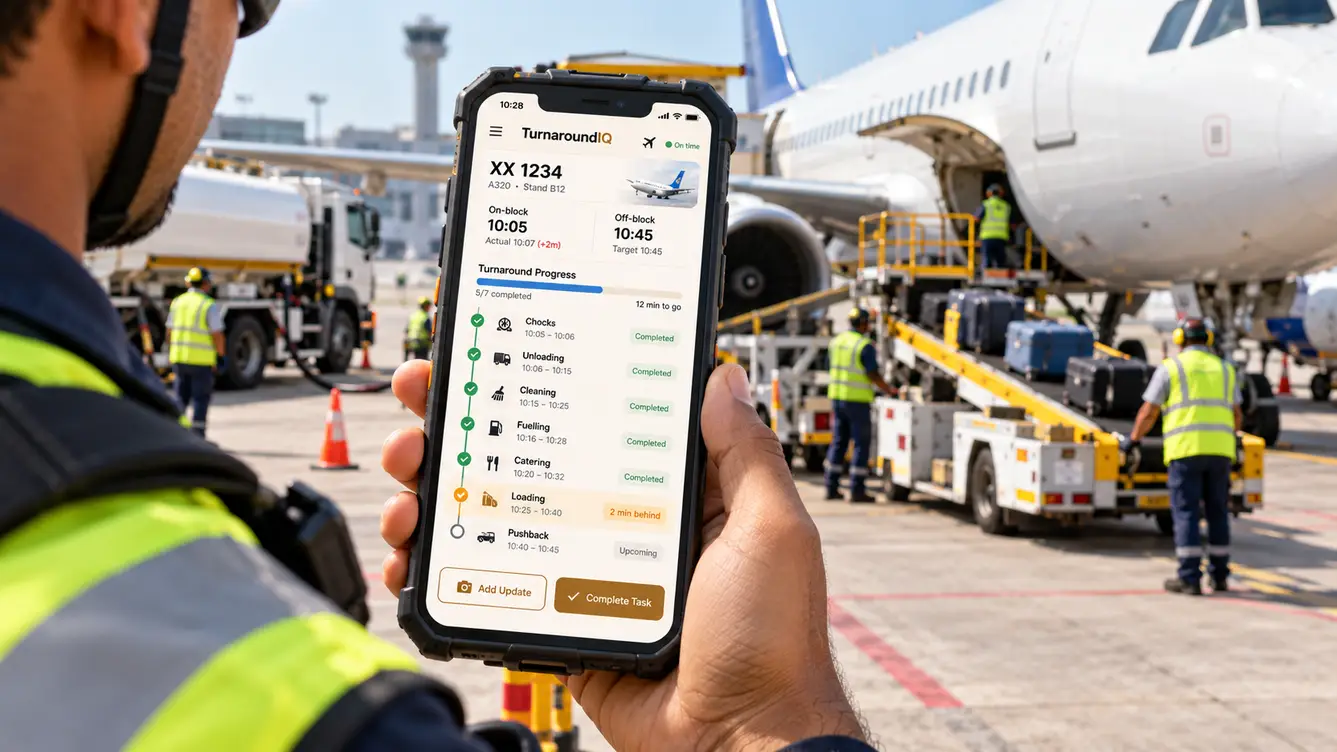
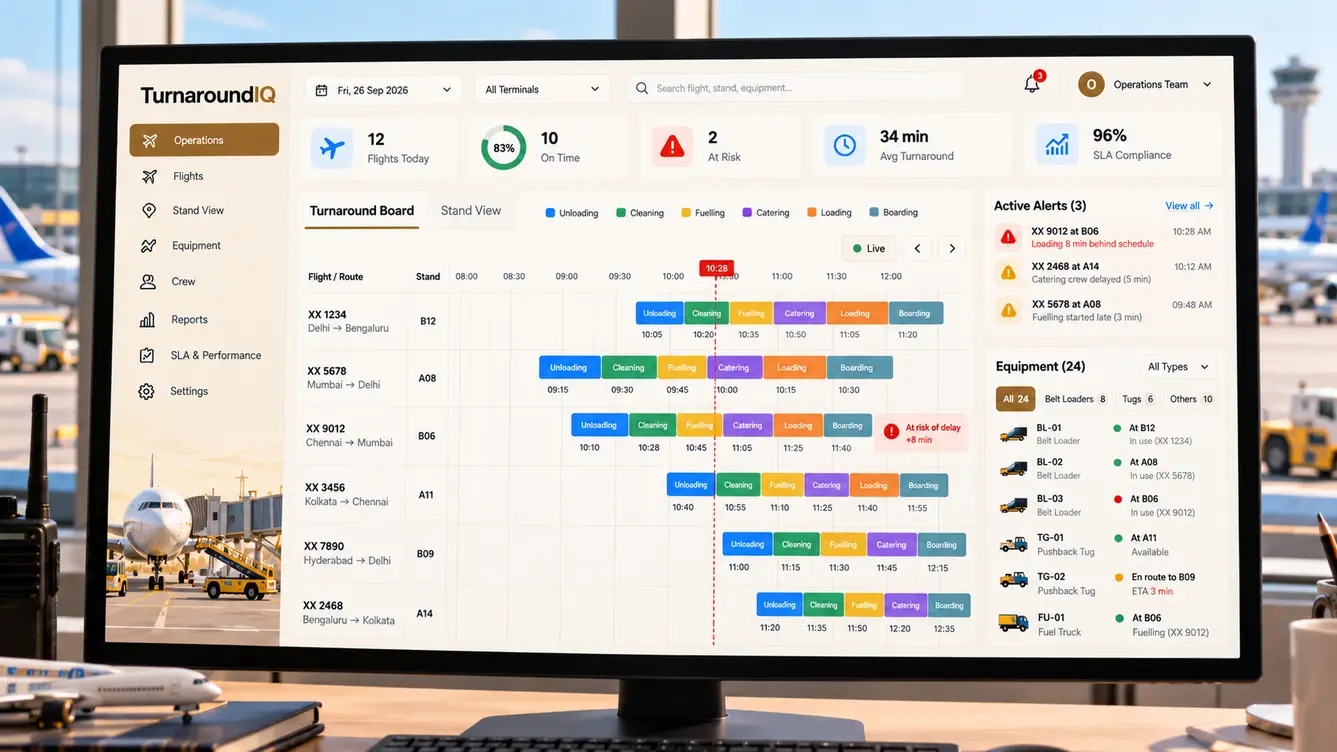
TurnaroundIQ builds a task timeline for each flight from the schedule and aircraft type. Crews tap tasks as they start and finish on rugged phones; equipment positions come from GPS trackers. The control screen shows every turn in progress, with tasks turning amber when they fall behind — early enough for supervisors to act.
When a delay happens, its cause is recorded with timestamps, turning arguments into evidence the airline can see in its SLA portal.
The team
Real-time reliability and ramp usability drove the team.
Ramp observation and airport rollout.
Rugged crew app and control screen.
Ramp crew app.
Timelines, control, SLA portal.
Schedule feeds and equipment trackers.
6 people in total, working as one team.
Decisions we made
Agreed with station managers and the operations director.
Radio or app updates?
- Keep radio coordination
- One-tap task updates on rugged phones
Our call: One-tap task updates on rugged phones. Taps created a timeline automatically; radios did not.
Explain delays or prevent them?
- Post-flight reports
- Live slippage alerts
Our call: Live slippage alerts. Early alerts let supervisors recover before departure.
Share with airlines?
- Internal only
- Airline SLA portal with timelines
Our call: Airline SLA portal with timelines. Transparency built trust and settled attribution.
Every feature, module by module
Everything that shipped for ramp crews, supervisors, managers and airlines.
- 01Assigned flights
Crew assignments by stand.
- 02Task timeline
Tasks by aircraft type.
- 03One-tap start and finish
Times captured automatically.
- 04Issue reporting
Damage and problems with photos.
- 05Rugged-device design
Large controls for gloves.
- 06Turnaround control screen
Every turn in progress.
- 07Slippage alerts
Tasks falling behind flagged.
- 08Crew reallocation
Move crews between flights.
- 09Equipment tracking
GPS positions of ramp equipment.
- 10Schedule integration
Flights from schedule feeds.
- 11Delay codes with evidence
Causes recorded with timestamps.
- 12On-time performance
By airline, stand and task.
- 13Roster planning
Crews by shift and flight bank.
- 14SLA portal
Turn timelines and delay causes.
- 15Monthly SLA reports
Generated automatically.
- 16Multi-airport support
All stations in one system.
- 17Role-based access
Crews, supervisors, managers and airlines.
- 18Audit trail
Every task event recorded.
Rollout
We launched at one airport with one airline's flights first, then expanded to all flights and two more airports. Delay attributions moved from arguments to shared timelines.
- Weeks 1–3Discovery
Shifts on the ramp during peak banks.
- Weeks 4–5Design
Crew app and control screen.
- Weeks 6–14Build
Apps, integrations and SLA portal.
- Weeks 15–17Pilot
One airport, one airline.
- Weeks 18–20Three airports
All flights at three stations.
What we learned
Real-time visibility prevents delays, not just explains them. Early amber flags let supervisors act.
Evidence changes relationships. Shared timelines improved conversations with airlines.
- React Native
- Next.js
- NestJS
- PostgreSQL
- Flight schedule feeds
- Equipment GPS tracking
- Real-time updates
- Private cloud