
RentNest: running two thousand co-living beds without a single rent register
A co-living operator managed thousands of beds across buildings, with rent collected by bank transfer and cash, maintenance requests on WhatsApp and move-ins handled on paper. We built RentNest: online bookings and digital agreements, automated rent collection, a resident app for requests and community, and an operations console for every building — so managers manage people, not spreadsheets.
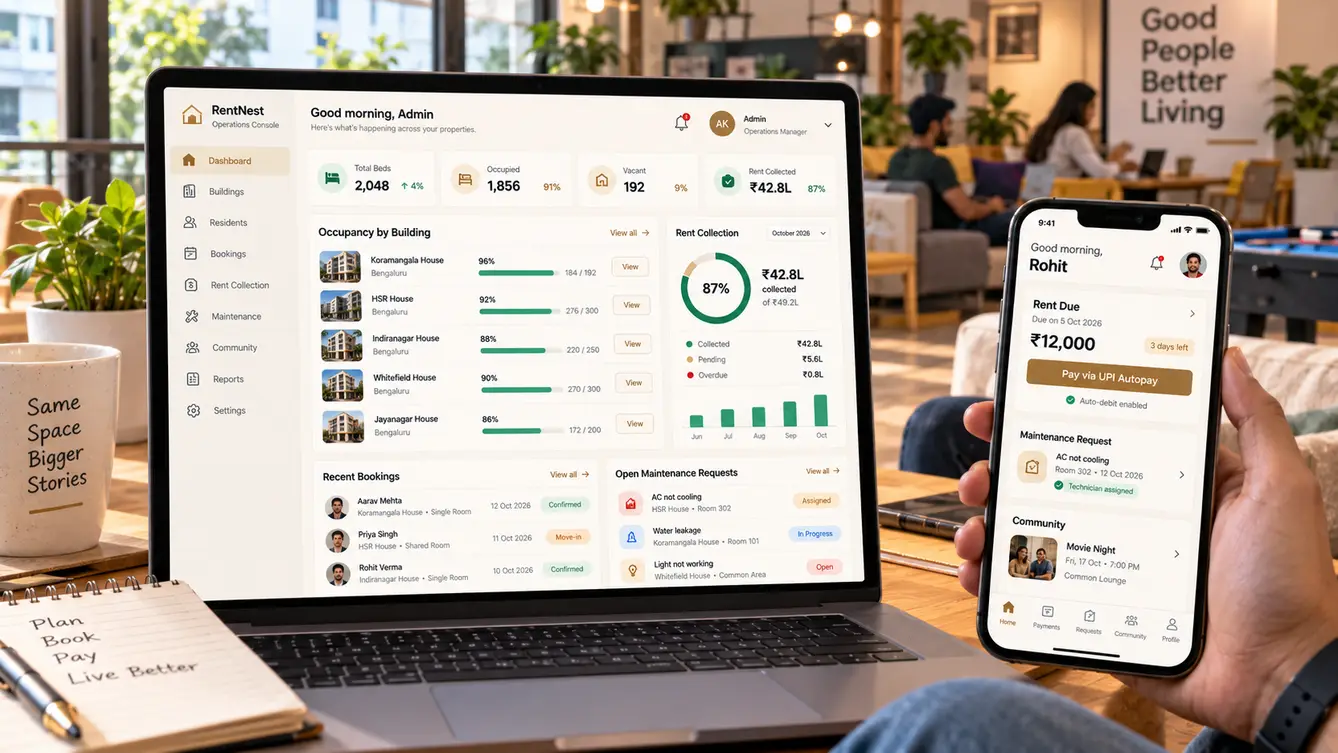
Two thousand beds, dozens of spreadsheets
RentNest's founder had grown the business building by building. Each property manager kept a spreadsheet of beds, residents and rent. Rent came by bank transfer with vague references, so reconciling who had paid took days each month. Maintenance requests arrived on WhatsApp and were forgotten. Move-ins required printed agreements and a bundle of photocopies.
“My property managers should be looking after residents, not chasing rent references.”
Listening to residents and managers
Residents — mostly young professionals and students — wanted what they got everywhere else: pay by UPI, raise a request in an app, see when it would be fixed. Managers wanted automatic rent reconciliation, a single view of vacancies and fewer calls about the same broken tap.
- Matching bank transfers to residents
- Tracking maintenance requests across chats
- Paper agreements and document collection
- Filling vacancies without a live view of beds

One record per bed
RentNest models every bed with its status, resident, rent and history. Bookings on the website reserve a specific bed, agreements are signed digitally, and move-in checklists record the room's condition with photos. Rent is collected through UPI Autopay mandates, so payments reconcile automatically to each resident.
Maintenance requests from the resident app go to the building's technician with photos, and residents see progress until the request is closed.
The team
A compact product team, launching one building at a time.
Operations workshops and building rollout.
Resident app, booking site and consoles.
Resident and manager apps.
Booking website and operations console.
Beds, payments, agreements and tickets.
6 people in total, working as one team.
Decisions we made
Agreed with the founder and head of operations.
Bank transfers or UPI Autopay?
- Bank transfers with references
- UPI Autopay mandates
Our call: UPI Autopay mandates. Autopay collected rent on time and reconciled automatically.
Paper or digital agreements?
- Printed agreements
- Digital agreements with e-signature
Our call: Digital agreements with e-signature. Digital agreements made booking fully online and records searchable.
WhatsApp or app for maintenance?
- Keep WhatsApp
- App requests with status tracking
Our call: App requests with status tracking. Tracked requests could be assigned, measured and closed.
Every feature, module by module
Everything that shipped for residents, managers and the operations team.
- 01Bed booking
Browse and reserve a specific bed online.
- 02Digital agreements
Sign agreements with e-signature.
- 03Rent payments
UPI Autopay and one-time payments.
- 04Maintenance requests
Raise with photos and track progress.
- 05Community events
Building events and announcements.
- 06Move-out and notice
Give notice and schedule move-out.
- 07Bed inventory
Live status of every bed.
- 08Move-in checklists
Room condition recorded with photos.
- 09Ticket assignment
Requests assigned to technicians.
- 10Visitor log
Visitors recorded at the entrance.
- 11Automatic reconciliation
Payments matched to residents.
- 12Late fee rules
Automatic reminders and late fees.
- 13Deposit management
Deposits held and refunded with deductions.
- 14Invoices and receipts
Generated for every payment.
- 15Occupancy dashboard
Occupancy by building and room type.
- 16Collections dashboard
Collected, due and overdue.
- 17Maintenance analytics
Response times and common issues.
- 18Lead management
Enquiries and visits tracked.
- 19Role-based access
Residents, managers, technicians and head office.
- 20Audit trail
Changes to rent and deposits recorded.
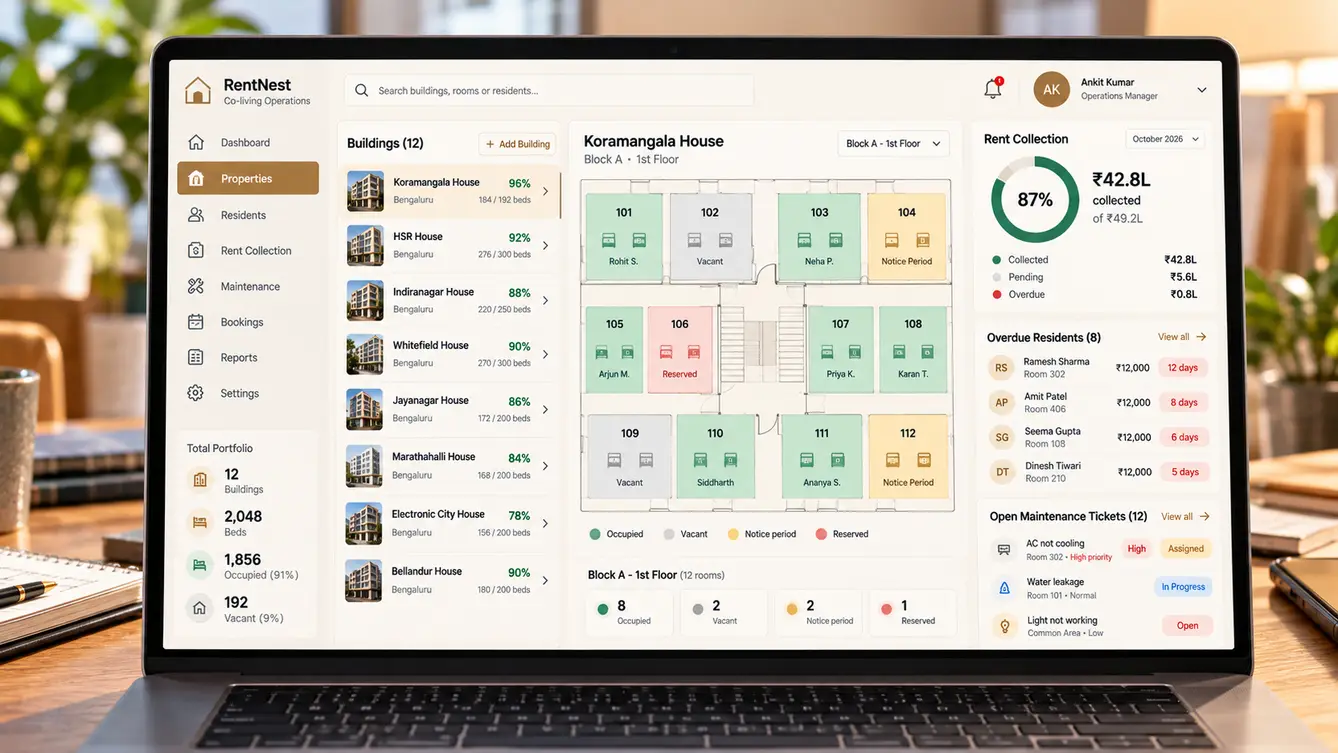
Rollout
Two buildings went live first. Existing residents were moved to UPI Autopay at their next rent cycle with a small welcome credit. Month-end reconciliation, which had taken days, became a review of a handful of exceptions.
- Weeks 1–2Discovery
Residents and managers interviewed.
- Weeks 3–4Design
Resident app and consoles prototyped.
- Weeks 5–12Build
Booking, payments, tickets and consoles.
- Weeks 13–14Two-building pilot
Residents moved to Autopay.
- Weeks 15–16All properties
Remaining buildings onboarded.
What we learned
Automate the money first. Autopay removed the most time-consuming work for managers.
Visible maintenance builds loyalty. Residents renewed when they saw requests handled.
- React Native
- Next.js
- NestJS
- PostgreSQL
- UPI Autopay and payment gateway
- E-signature for agreements
- WhatsApp Business API
- AWS Mumbai