
PuzzlePals: a maths game kids ask to play, built with teachers and designed with parents' trust in mind
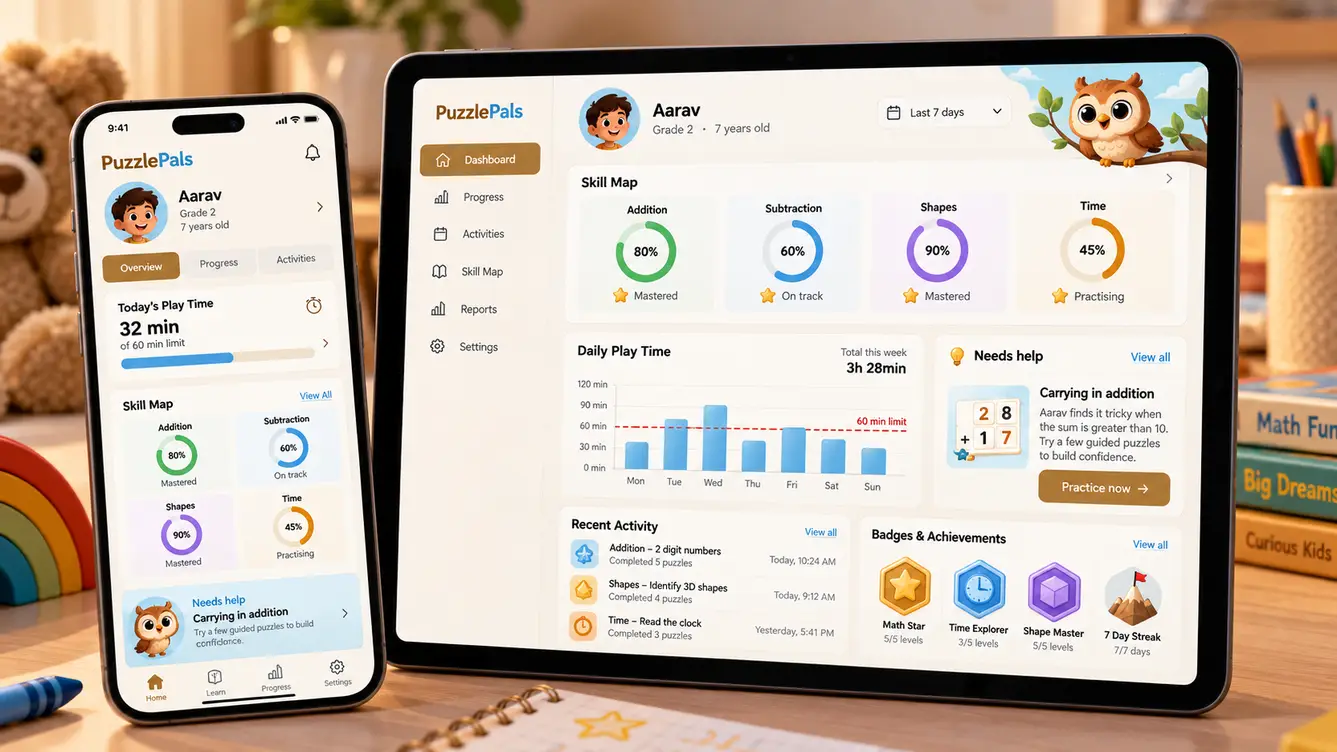
An edtech gaming studio wanted a maths game for children aged six to ten that was genuinely fun, genuinely educational and safe. We built PuzzlePals: adaptive puzzle levels mapped to the school curriculum, a friendly character world, offline play, a parent dashboard with progress and screen-time controls, and no ads or open chat.
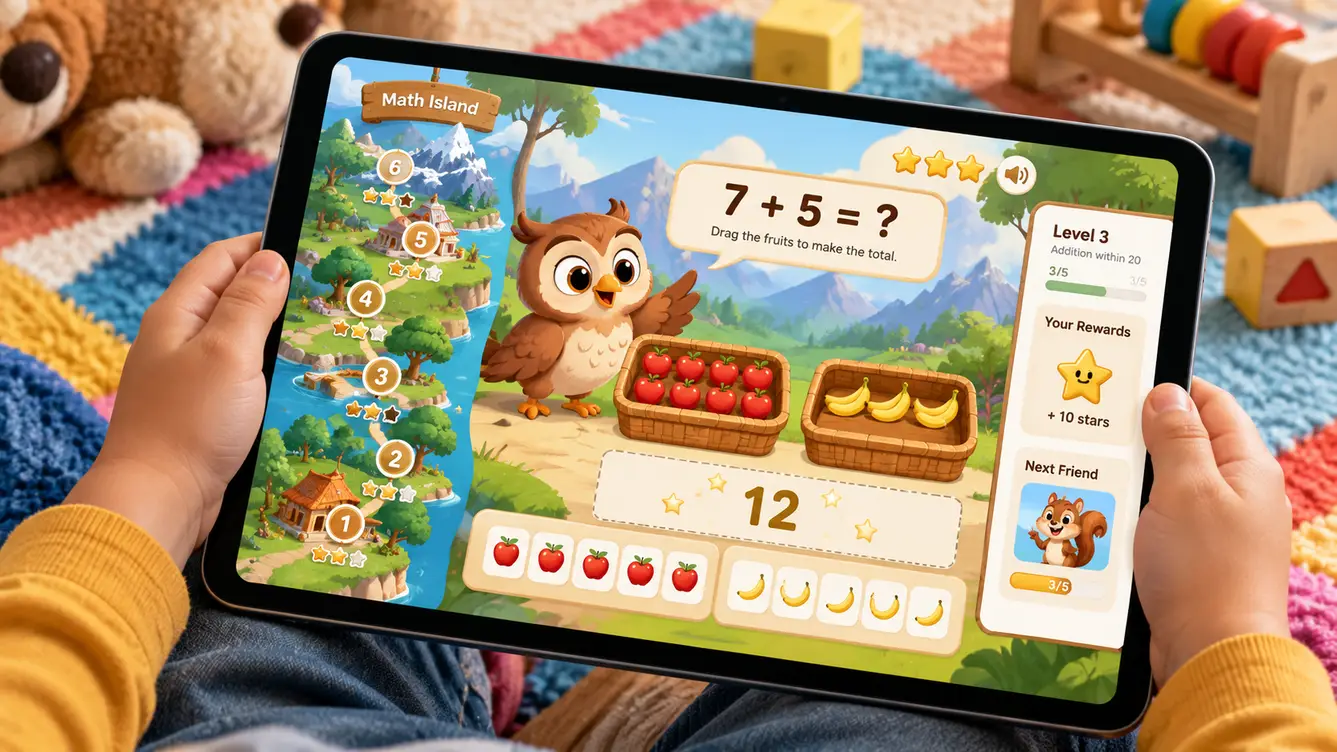
Fun or educational — why not both?
PuzzlePals' founders were parents and former teachers. They saw children glued to games that taught nothing, and educational apps that children abandoned after a day. They wanted a maths game children would choose to play, that followed what they learned in school, and that parents could trust completely.
“If a child has to be told to play it, we've failed.”
Playtesting with children
We ran playtests with children in schools and homes, with parents present and consent recorded. Children loved characters, collecting and visible progress; they hated long instructions and being told they were wrong. Teachers wanted puzzles mapped to curriculum topics. Parents wanted no ads, no chat with strangers and control over screen time.
- Show, don't tell — no text-heavy instructions
- Mistakes become hints, never failures
- Every session ends with visible progress
- No ads, no open chat, parent-controlled time

Adaptive puzzles in a world worth exploring
Every puzzle maps to a curriculum skill. An adaptive model adjusts difficulty so each child stays in the zone where puzzles are challenging but achievable. Children progress across an island world, collecting friends for the owl character. The game works fully offline and syncs progress when connected.
Parents see which skills their child is mastering and where they are stuck, and set daily time limits the game respects gracefully.
The team
Game design, learning design and child safety each had an owner.
Founder workshops and playtest programme.
Puzzles, progression and character world.
Curriculum mapping and skill model.
Game client and offline sync.
Parent dashboard and authoring tool.
Adaptive difficulty model.
7 people in total, working as one team.
Decisions we made
Agreed with the founders and advising teachers.
Ads or subscription?
- Free with ads
- Subscription with a free trial, no ads
Our call: Subscription with a free trial, no ads. Ads have no place in a children's learning product. A subscription aligned the business with parents.
Fixed levels or adaptive difficulty?
- Fixed level order
- Adaptive difficulty per child
Our call: Adaptive difficulty per child. Children learn at different paces; adaptivity kept each child engaged.
Social features?
- Open chat and multiplayer
- No chat; safe, parent-approved sharing only
Our call: No chat; safe, parent-approved sharing only. Child safety comes first.
Every feature, module by module
Everything that shipped for children, parents and the content team.
- 01Curriculum-mapped puzzles
Every puzzle tied to a school skill.
- 02Adaptive difficulty
Challenge tuned to each child.
- 03Island world progression
Explore and collect character friends.
- 04Hints, not failures
Mistakes lead to gentle hints.
- 05Audio instructions
No reading required for young children.
- 06Offline play
Works without internet.
- 07Skill progress
Mastery by topic.
- 08Help suggestions
Where to support at home.
- 09Screen-time limits
Daily limits respected gracefully.
- 10Multiple child profiles
Siblings on one subscription.
- 11Puzzle authoring tool
Designers create puzzles without code.
- 12Curriculum mapping
Skills aligned to school boards.
- 13Playtest analytics
Where children get stuck or quit.
- 14Localisation
Audio in English and Hindi.
- 15No ads
A clean experience for children.
- 16No open chat
No contact with strangers.
- 17Parental gate
Purchases and settings behind a parent check.
- 18Subscriptions
Trial and family plans.
- 19Privacy by design
Minimal data collected about children.
Launch
PuzzlePals launched after a closed beta with families from the playtests. Parents' most common feedback was that their children asked to play — exactly the founders' goal.
- Weeks 1–3Discovery
Founder workshops and first playtests.
- Weeks 4–7Prototype
Core puzzle loop tested with children.
- Weeks 8–16Build
World, adaptivity, parent dashboard and authoring.
- Weeks 17–19Closed beta
Families from the playtests.
- Week 20Launch
Public release.
What we learned
Test with the real users. Children's reactions overruled our assumptions many times.
Trust is a feature for parents. No ads and no chat made the purchase decision easy.
- Unity
- Next.js
- NestJS
- PostgreSQL
- Adaptive difficulty model
- Offline progress sync
- Subscription billing
- AWS Mumbai