
Vanaaya: rebuilding a D2C Ayurveda brand's store so it loaded fast, sold subscriptions and stopped losing customers at checkout
An Ayurvedic skincare brand had outgrown its template store: pages were slow on mobile, checkout lost shoppers, and customers who loved the products forgot to reorder. We built Vanaaya's new headless storefront, a one-page checkout with COD verification, subscriptions, a skin-quiz recommender and the operations tools behind them — 26 features built for mobile shoppers in India.
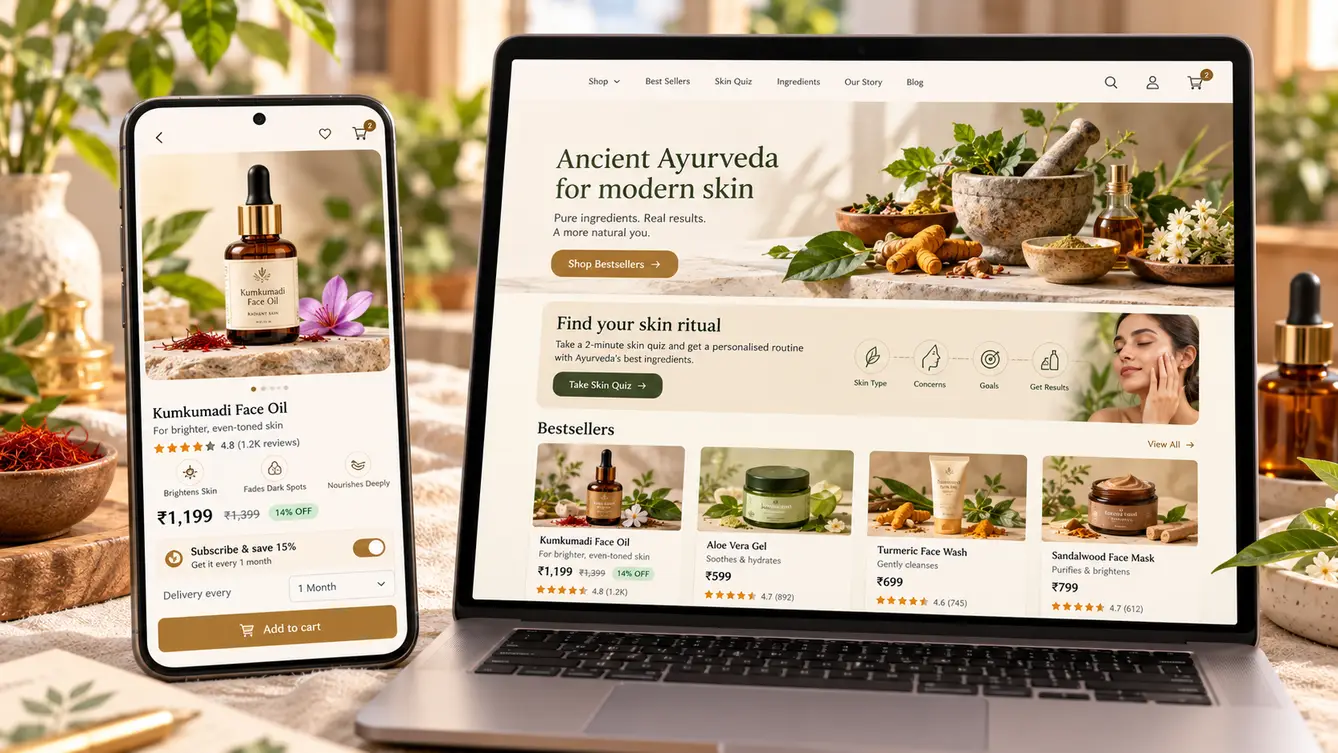
A beautiful brand on a slow store
Vanaaya's founders had built something customers loved: small-batch Ayurvedic skincare with a loyal following on Instagram. Their store, built on a popular template with a pile of plugins, had not kept up. Product pages took several seconds to load on a mid-range phone, the checkout had four steps and a surprise shipping fee, and cash-on-delivery orders came back undelivered at a painful rate.
Their best customers reordered — but only when they remembered, which was often after running out and trying something else.
“Our customers love the oil. They just forget to buy it again.”
Finding where shoppers left
We started with the analytics and a round of session recordings. Most traffic arrived from Instagram onto product pages on mobile, and a large share left before the page finished loading. Of those who added to cart, many abandoned at the shipping step. COD orders from first-time buyers had the highest return-to-origin rate.
We also interviewed repeat customers. They wanted two things: a way to reorder without thinking, and guidance on which products suited their skin.
- Slow product pages on mid-range phones
- Multi-step checkout with a late shipping surprise
- COD orders from new buyers returned undelivered
- No subscription or reorder reminders

A headless rebuild
We rebuilt the storefront on Next.js with a headless commerce backend. Product pages are pre-rendered and served from the edge, images sized for each device, and scripts from third-party plugins removed or deferred. The brand's look stayed; the weight did not.
Checkout became a single page: phone number first, address auto-filled for returning customers, shipping cost shown upfront, UPI as the fastest option, and COD confirmed by a WhatsApp message before dispatch.
The team
A design-led team, with performance treated as a feature from the first sprint.
Founder workshops, funnel analysis and launch plan.
Storefront, checkout and skin quiz.
Next.js storefront and performance.
Commerce backend, subscriptions and integrations.
Recommendation model and quiz logic.
Checkout, payment and device testing.
7 people in total, working as one team.
Decisions we made
Each was agreed with the founders, weighing brand experience against conversion.
Stay on the template platform or go headless?
- Optimise the existing template
- Headless storefront with a commerce backend
Our call: Headless storefront with a commerce backend. Plugins made the template slow and fragile. Headless gave full control over performance and checkout while keeping a robust commerce backend.
How to handle risky COD orders?
- Disable COD
- Keep COD with WhatsApp confirmation and risk rules
Our call: Keep COD with WhatsApp confirmation and risk rules. Many first-time Indian shoppers want COD. Confirmation and simple risk rules cut undelivered orders without losing those customers.
How to drive repeat purchases?
- Discount emails
- Subscriptions plus usage-based reorder reminders
Our call: Subscriptions plus usage-based reorder reminders. Customers reordered when products ran out. Timing reminders to each product's typical usage period matched how people actually shop.
How should recommendations work?
- Generic bestsellers
- Skin quiz with a recommendation model
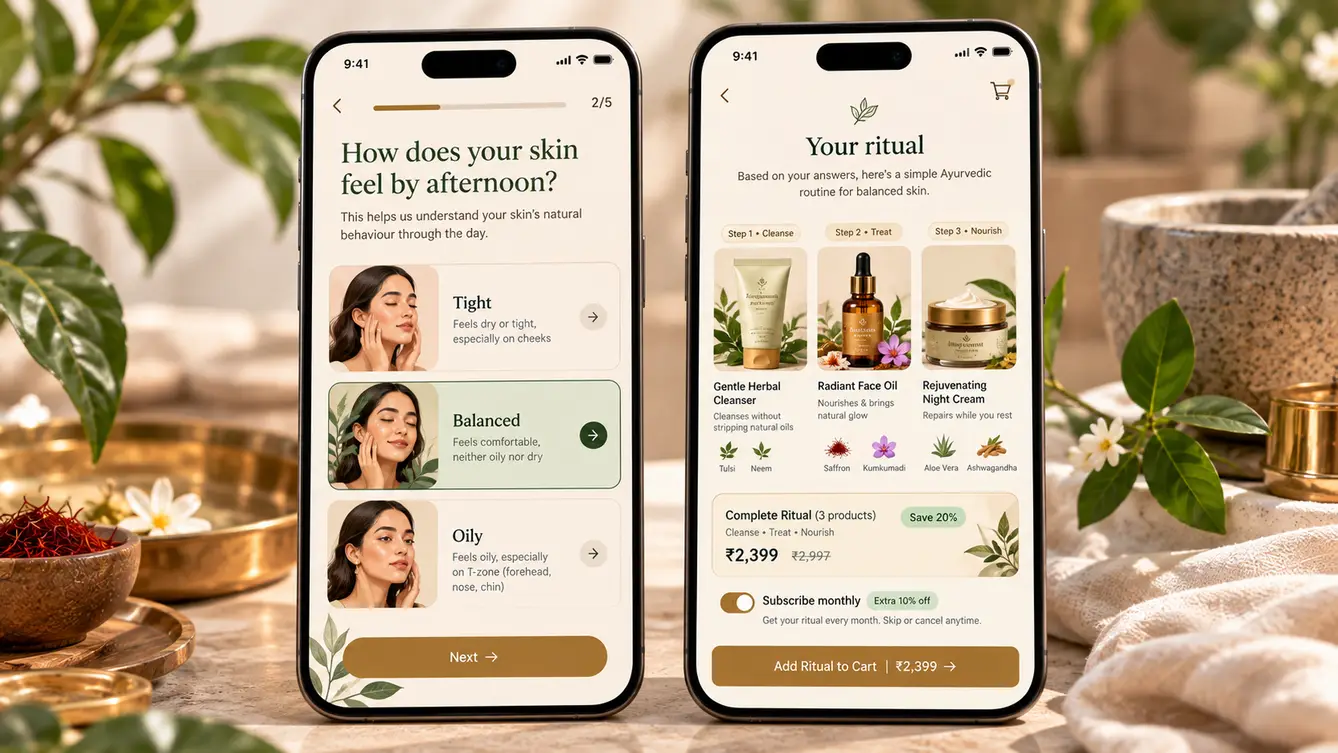
Our call: Skin quiz with a recommendation model. Customers asked for guidance. A short quiz combined with purchase data recommended routines that felt personal.
The 26 features
Everything in the new store and the tools behind it.
- 01Edge-rendered product pages
Pre-rendered pages served close to shoppers.
- 02Responsive image optimisation
Images sized and compressed for each device.
- 03Ingredient stories
Rich product pages with ingredients and rituals.
- 04Reviews with photos
Verified buyer reviews and photos.
- 05SEO-friendly structure
Clean URLs, structured data and redirects preserved.
- 06One-page checkout
Phone, address and payment on a single page.
- 07Upfront shipping costs
Delivery cost and date shown before checkout.
- 08UPI, cards and COD
All common payment methods in India.
- 09COD confirmation on WhatsApp
Orders confirmed before dispatch.
- 10Address auto-fill
Returning customers check out in seconds.
- 11Subscribe and save
Recurring deliveries with a discount.
- 12Reorder reminders
Timed to each product's usage period.
- 13Skin quiz
Five questions to a personalised routine.
- 14Personalised recommendations
Products suggested from quiz and history.
- 15Loyalty rewards
Points on purchases and referrals.
- 16Order management
Orders, returns and refunds in one console.
- 17Shipping integration
Labels, tracking and NDR handling with the courier aggregator.
- 18Inventory sync
Stock synced with the warehouse.
- 19Subscription management
Pause, skip and change subscriptions.
- 20Promotions engine
Coupons, bundles and free-gift rules.
- 21Analytics dashboard
Conversion, repeat rate and subscription revenue.
- 22RTO risk rules
Flags for high-risk COD orders.
- 23Role-based access
Permissions for operations, marketing and founders.
- 24GST invoicing
Compliant invoices for every order.
- 25Customer support view
Order history and status for support agents.
- 26Content management
Marketing edits pages without developers.
Launch
We launched the new store with all existing URLs redirected so search rankings and Instagram links kept working. The first month showed what the funnel analysis predicted: more shoppers reached checkout, and fewer left it. Subscriptions, introduced as "subscribe and save" on bestsellers, quickly became a meaningful share of orders.
- Weeks 1–2Discovery
Funnel analysis, session recordings and customer interviews.
- Weeks 3–5Design
Storefront, one-page checkout and skin quiz.
- Weeks 6–13Build
Headless storefront, checkout, subscriptions and integrations.
- Weeks 14–15Migration
Products, customers and URL redirects.
- Week 16Launch
New store live with subscriptions on bestsellers.
What we learned
Speed is a brand experience. A beautiful page nobody waits for is not beautiful.
Retention is built into checkout. Subscriptions and reorder reminders did more for revenue than any new acquisition channel.
- Next.js
- Headless commerce backend
- PostgreSQL
- Razorpay with UPI and COD
- Shiprocket
- WhatsApp Business API
- Recommendation model
- Vercel edge