
Kasrat Club: how a gym chain used software to fix its real problem — members who stopped coming in week three
A growing gym chain was signing up members faster than ever and losing them almost as fast. We built Kasrat Club: a member app with class booking and personalised plans, a trainer app, QR check-in and an early-warning system for members about to drop off — 24 features aimed at one goal: getting members to keep showing up.
The week-three problem
Kasrat Club's founder brought us a chart before a feature list. It showed member visits by week since joining. The curve was steep: enthusiastic first weeks, then a sharp drop around week three, and by month three a large share of members were paying but not coming. Most of them did not renew.
The chain had tried the obvious fixes — discounts on renewal, reminder SMS blasts — with little effect. Their existing gym software handled billing and access control well but knew nothing about whether a member was actually making progress or quietly giving up.
“Selling memberships is easy. Getting people to come on a Tuesday in month two is the whole business.”
What the trainers already knew
We interviewed trainers across three clubs. They knew exactly which members were drifting — they just found out too late and had no structured way to act. The best trainers kept mental lists, sent personal WhatsApp messages and adjusted plans when members got bored. That behaviour was the chain's real retention engine, and it depended entirely on individual trainers remembering.
The project goal became clear: give every trainer the instincts of the best trainer, by surfacing at-risk members early and making the right follow-up take seconds.
- Visit frequency dropping below the member's own baseline
- Skipping booked classes without cancelling
- No change in workout plan for several weeks
- Visiting only at off-peak hours after starting at peak

An app members want to open
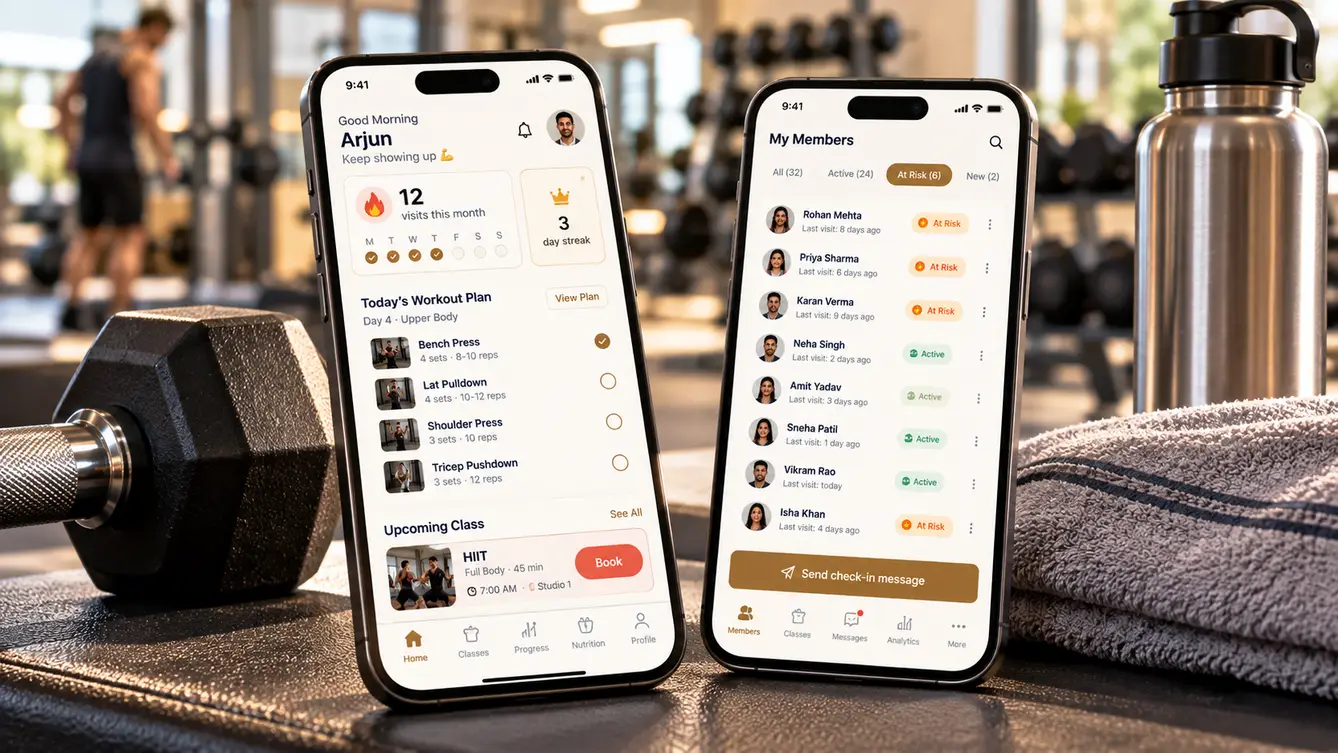
The member app is built around one screen: what to do today. It shows the day's workout from the member's plan, classes they can book, and their streak. Progress is shown in things members care about — visits, strength milestones, a body-measurement trend — rather than abstract points.
The trainer app is built around a morning list: members who need attention today, why, and a one-tap action — a check-in message, a plan refresh or an invitation to a class with a friend.
The team
A lean cross-platform team with a data scientist for the drop-off model.
Founder and trainer workshops, pilot measurement.
Member app, trainer morning list and dashboards.
Member and trainer apps.
Owner dashboard, check-in and billing integration.
Bookings, plans, notifications and APIs.
Drop-off prediction and cohort analytics.
7 people in total, working as one team.
Decisions that mattered
These were agreed with the founder and two head trainers.
Automated nudges or trainer-led follow-ups?
- Automated push notifications to members
- Alerts to trainers, who follow up personally
Our call: Alerts to trainers, who follow up personally. Members ignored generic reminders but responded to their trainer. The model identifies who needs attention; a person reaches out.
Replace the existing access and billing system?
- Replace everything
- Integrate with existing access control and billing
Our call: Integrate with existing access control and billing. Access control and billing already worked. Integrating avoided hardware changes at every club and let us focus on retention.
Flutter or React Native?
- React Native
- Flutter
Our call: Flutter. Both would have worked. Flutter suited the animation-heavy workout screens and the team's existing experience.
Gamification level?
- Points, badges and leaderboards
- Streaks and real progress milestones
Our call: Streaks and real progress milestones. Member interviews showed public leaderboards discouraged beginners. Personal streaks and real milestones motivated without comparison.
The 24 features
Everything in the first release across members, trainers, front desk and owners.
- 01Today's workout
The day's plan with exercise videos and sets.
- 02Class booking
Book, cancel and join waitlists for classes.
- 03Streaks and milestones
Visit streaks and strength milestones.
- 04Progress tracking
Measurements and personal records over time.
- 05Membership and payments
Renewals, freezes and UPI payments.
- 06Bring a friend
Guest passes shared by link.
- 07Members needing attention
Daily list of at-risk members with reasons.
- 08One-tap check-ins
Personal message templates in the trainer's voice.
- 09Plan builder
Create and refresh workout plans quickly.
- 10Session notes
Notes and progress from each training session.
- 11Class attendance
Attendance and no-shows for each class.
- 12QR check-in
Members scan in from the app.
- 13Access control integration
Check-ins sync with existing turnstiles.
- 14Class scheduling
Timetables, capacities and instructor assignment.
- 15Lead management
Trial visits and enquiries tracked to conversion.
- 16Drop-off prediction
Model flags members likely to stop visiting.
- 17Cohort retention
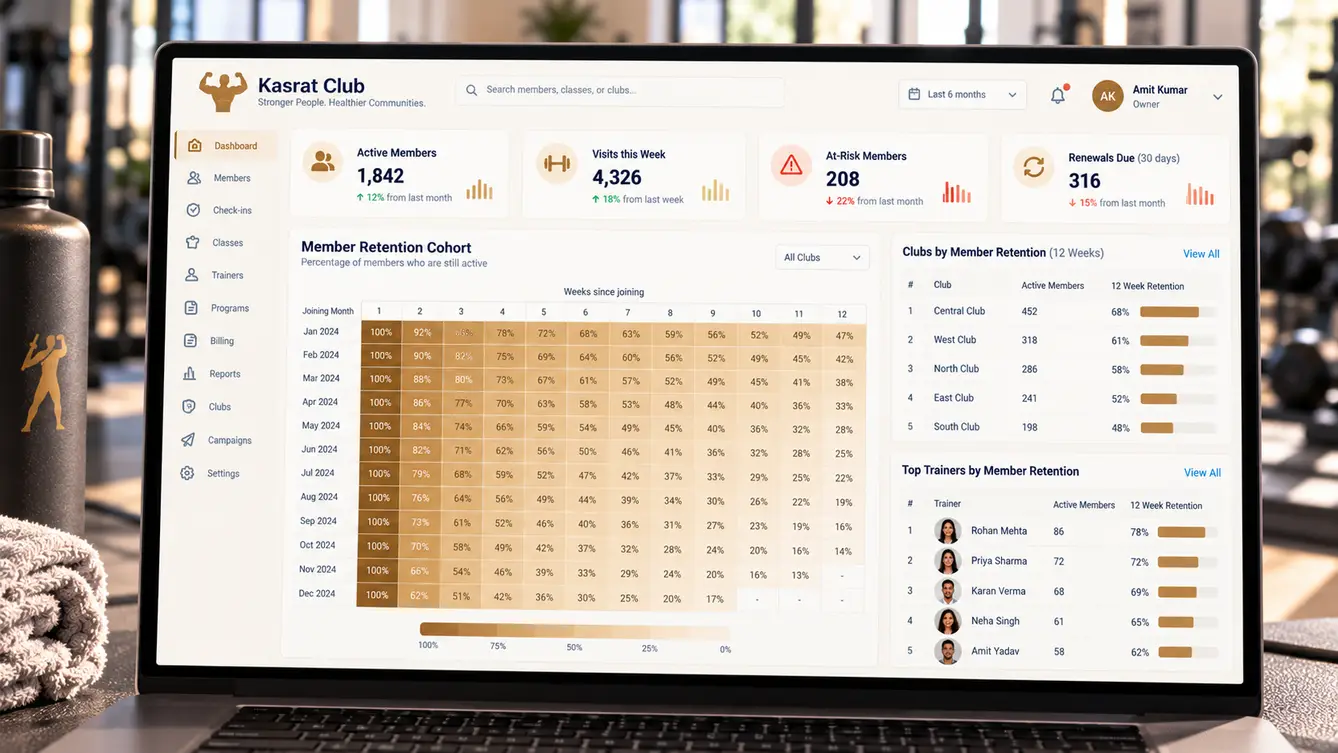
Visits by joining month and weeks since joining.
- 18Trainer retention scores
Member retention by trainer.
- 19Club comparison
Visits, retention and renewals across clubs.
- 20Renewal forecast
Expected renewals by month.
- 21Role-based access
Owners, managers, trainers and staff permissions.
- 22Notification controls
Members choose how and when they are contacted.
- 23Data export
Member and visit data export for the owner.
- 24Billing integration
Subscriptions synced with the existing billing system.
Rollout
We launched in one club and compared its retention curve with similar clubs that had not yet switched. Once the trainers' morning list had proven itself, the remaining clubs followed, with the pilot club's head trainer running each launch session.
- Weeks 1–2Discovery
Visit data analysed; trainer interviews across three clubs.
- Weeks 3–4Design
Member app and trainer morning list prototyped.
- Weeks 5–11Build
Apps, integrations and drop-off model.
- Weeks 12–14Pilot club
One club live; retention compared with peers.
- Weeks 15–16All clubs
Rollout led by the pilot club's head trainer.
What we learned
The model's job is to prompt a human. A drop-off prediction on its own changes nothing; a trainer's personal message at the right moment does.
Measure what the business lives on. Designing everything around visits per week, not app downloads, kept the product focused.
- Flutter
- Next.js
- Node.js
- PostgreSQL
- Churn prediction model
- Razorpay subscriptions
- Firebase notifications