CampaignKite: taking an influencer marketing agency from spreadsheets to a platform brands could log into
An influencer marketing agency ran hundreds of creator campaigns a month on spreadsheets, email and DMs, and brands kept asking for proof of results. We built CampaignKite: creator discovery with audience quality checks, campaign workflows, content approvals, payments and live performance reporting for brands — 25 features that turned an agency's process into a product.
Three hundred campaigns in spreadsheets
CampaignKite's founders ran a successful influencer marketing agency. Every campaign lived in a spreadsheet: creator shortlists, rates, briefs, drafts sent over DMs, approvals by email, and screenshots of post insights pasted into decks. Brands increasingly asked the same questions: are these followers real, and what did we get for our money?
The founders wanted to answer those questions with data — and eventually to let brands run smaller campaigns themselves.
“Brands don't doubt creators. They doubt our screenshots.”
Mapping the agency's process
We sat with account managers through a campaign from brief to report. The work split into discovery, negotiation, briefing, content approval, publishing, payment and reporting. Discovery and reporting took the most time and carried the most risk: choosing creators with inflated followings, and reporting results by hand.
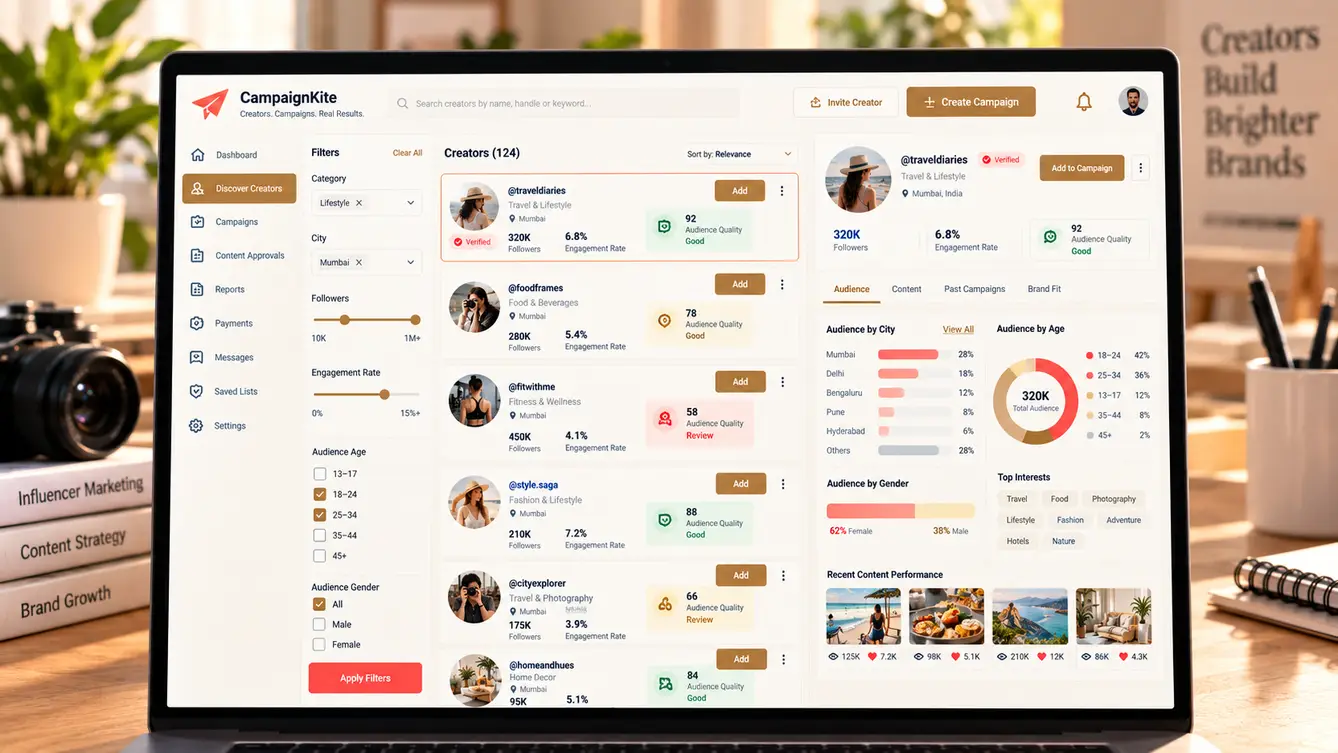
- Evidence that a creator's audience is real and relevant
- One place for briefs, drafts and approvals
- On-time creator payments with records
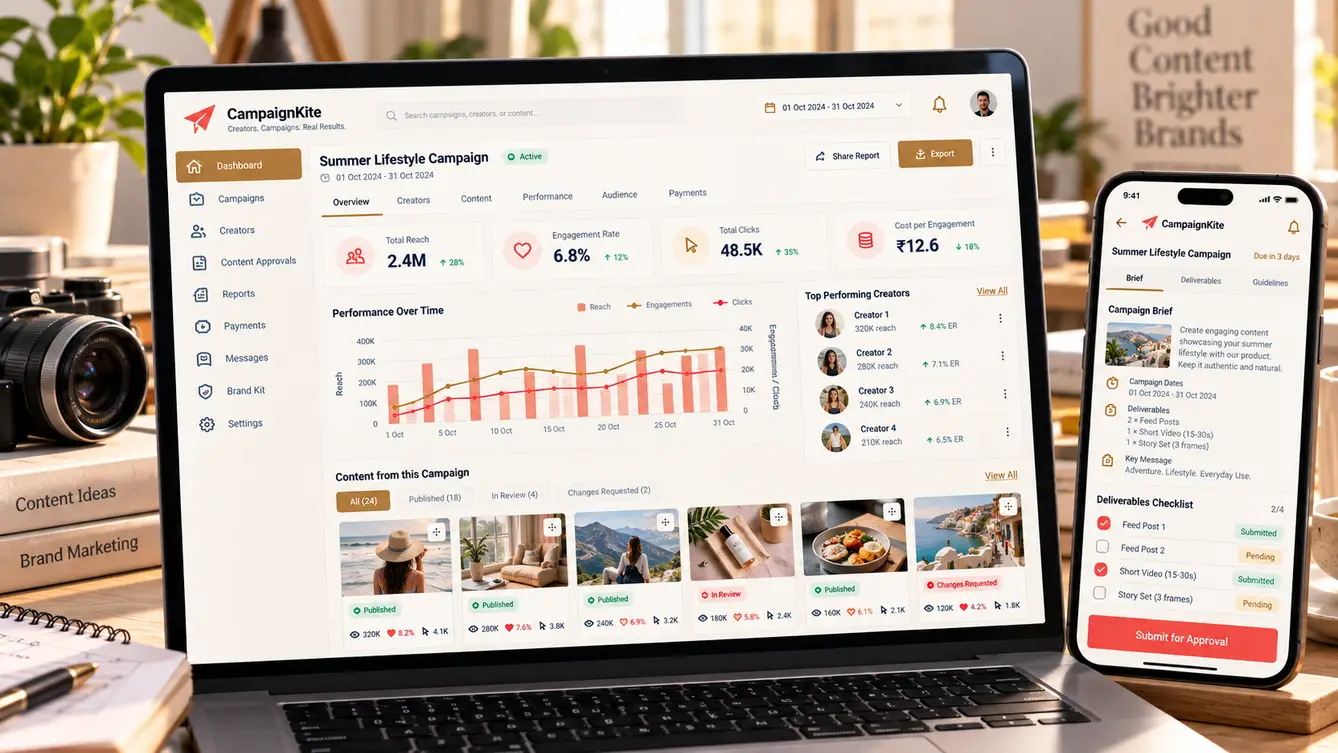
- Live, verifiable campaign results

Real audiences, real results
With creators' permission, CampaignKite connects to their accounts through official platform APIs to read audience and post insights directly. An audience quality model flags suspicious follower growth and engagement patterns. Campaign results update automatically from the same data, so reports are generated, not assembled from screenshots.
Creators get their own app for briefs, drafts, approvals and payment status — which made working with the agency noticeably easier for them too.
The team
Platform API integrations and data quality were central, so a data engineer led that work.
Agency process mapping and launch.
Agency workspace, brand portal and creator app.
Campaign workflow, approvals and portal.
Creator app.
Platform APIs, insights pipeline and reporting.
Audience quality model.
7 people in total, working as one team.
Decisions we made
Agreed with the founders and head of accounts.
Scrape public data or use official APIs?
- Scrape public profiles
- Official APIs with creator permission
Our call: Official APIs with creator permission. Official APIs gave accurate insights, respected platform rules and gave brands verifiable data.
Agency tool or brand self-serve?
- Agency-only tool
- Agency workspace first, brand portal from day one
Our call: Agency workspace first, brand portal from day one. Giving brands live visibility built trust immediately and opened the path to self-serve.
How to judge audience quality?
- Follower count and engagement rate
- Model on growth patterns, engagement authenticity and audience fit
Our call: Model on growth patterns, engagement authenticity and audience fit. Headline numbers are easy to inflate. Pattern-based checks caught what simple ratios missed.
Manage creator payments?
- Keep payments offline
- Payouts tracked in the platform
Our call: Payouts tracked in the platform. On-time, recorded payments made creators more willing to work with the agency again.
The 25 features
Everything that shipped for the agency, brands and creators.
- 01Creator search
Filters by category, location, audience and engagement.
- 02Audience quality score
Flags suspicious growth and engagement.
- 03Audience breakdown
Location, age and gender of followers.
- 04Shortlists
Shareable shortlists for brand approval.
- 05Rate cards
Creator rates and past performance.
- 06Campaign briefs
Briefs with deliverables and dates.
- 07Content approvals
Drafts reviewed and approved in one place.
- 08Publishing tracker
Posts tracked against the plan.
- 09Contracts
Agreements with usage rights recorded.
- 10Creator app
Briefs, submissions and payment status for creators.
- 11Live campaign dashboard
Reach, engagement and clicks as they happen.
- 12Tracked links and codes
Clicks and conversions per creator.
- 13Automated reports
Campaign reports generated from data.
- 14Benchmarks
Performance against similar campaigns.
- 15Creator payouts
Payments tracked and recorded.
- 16Brand portal
Brands follow campaigns live.
- 17Self-serve campaigns
Brands launch small campaigns themselves.
- 18Budget tracking
Spend against campaign budgets.
- 19Role-based access
Agency, brands and creators.
- 20Creator consent management
Creators control data access.
- 21Invoicing
Brand invoices and GST records.
- 22Audit trail
Approvals and changes recorded.
- 23Analytics
Agency performance across campaigns.
- 24Data export
Campaign data exports for brands.
- 25Notifications
Deadlines and approvals alerts.
Launch
The agency moved new campaigns onto CampaignKite first. Brands were invited to the portal to follow their campaigns live, and within months several asked to run small campaigns directly on the platform — the self-serve model the founders had hoped for.
- Weeks 1–2Discovery
A campaign followed from brief to report.
- Weeks 3–4Design
Workspace, portal and creator app prototyped.
- Weeks 5–14Build
Workflow, APIs, quality model and reporting.
- Weeks 15–16Agency pilot
New campaigns run on CampaignKite.
- Weeks 17–18Brand launch
Brands invited to the portal.
What we learned
First-party data builds trust. Reading insights through official APIs ended arguments about screenshots.
Build for both sides of a marketplace. Making creators' lives easier improved campaign quality.
- Next.js
- React Native
- NestJS
- PostgreSQL
- Social platform APIs
- Audience quality model
- Payout integrations
- AWS Mumbai