
AI Development Company in Seattle
Cloud, commerce and aerospace in the Pacific Northwest.
Drema is a AI development company in Seattle building AI systems for startups, growing businesses and enterprises across Seattle, United States. We deliver for Seattle clients with a named lead, a planned working rhythm and the same engineering standards on every project.
Seattle expects AI features built properly: evaluation sets, tracing, guardrails, caching and cost controls around the model. We build copilots, retrieval systems and agents that way — the approach behind DeepSync's AI analytics.
- AI chatbots and virtual assistants
- Document processing and data extraction
- AI copilots inside existing software
- Retrieval (RAG) systems over company knowledge
- AI agents for workflow automation
- Computer vision and image inspection
- Demand forecasting and predictive analytics
- Recommendation engines
- Speech-to-text and call analysis
- Multilingual customer-support automation
- AI content and report generation
- Fraud and anomaly detection







Building in Seattle?
Bring the problem as it actually is, constraints included.
You will get a straight answer on whether we are the right team.
Top AI Development Company in Seattle for your business.
Seattle is home to two of the world's largest cloud and software companies, a major share of global e-commerce infrastructure, and a long aerospace history anchored by large aircraft assembly plants in the region.
- SaaS
- E-commerce & D2C
- Healthcare
- Logistics & Supply Chain
- South Lake Union
- Downtown Seattle
- Bellevue
- Redmond
- Pioneer Square
Seattle's startups are frequently founded by engineers from its large tech employers. They are technically demanding, cloud-native by instinct and expect partners to write production-quality code, not prototypes.
More about the Seattle market
Its ports connect the US to Asia, and global-health organisations and life-sciences research make it an important healthcare city.
Why choose Drema for AI development services in Seattle?
If you are looking for AI development services in Seattle, you want a partner that builds properly, communicates plainly and is still around after launch. That is how we work.
Safe & Secure
NDA by default, least-privilege access and security review before launch.
You Own Everything
Code, designs and data live in your accounts. No lock-in.
Senior Engineers
The people on your call are the people writing your code.
Transparent Process
Sprint demos, a shared board and honest progress reports.
Modern Technology
Proven, well-supported stacks your future team can maintain.

Fixed First Release
A scoped, priced first milestone before bigger commitments.

Delivered on Time
Short sprints make slippage visible early, while it is fixable.

Support After Launch
Monitoring, fixes and upgrades on a plan that suits you.
Our AI Development Services in Seattle
Everything under one roof, so a Seattle business does not have to coordinate separate design, development and support vendors.

Generative AI & LLM Apps
Assistants, copilots and content generation on frontier and open-weight models, with prompts versioned and tested like code.
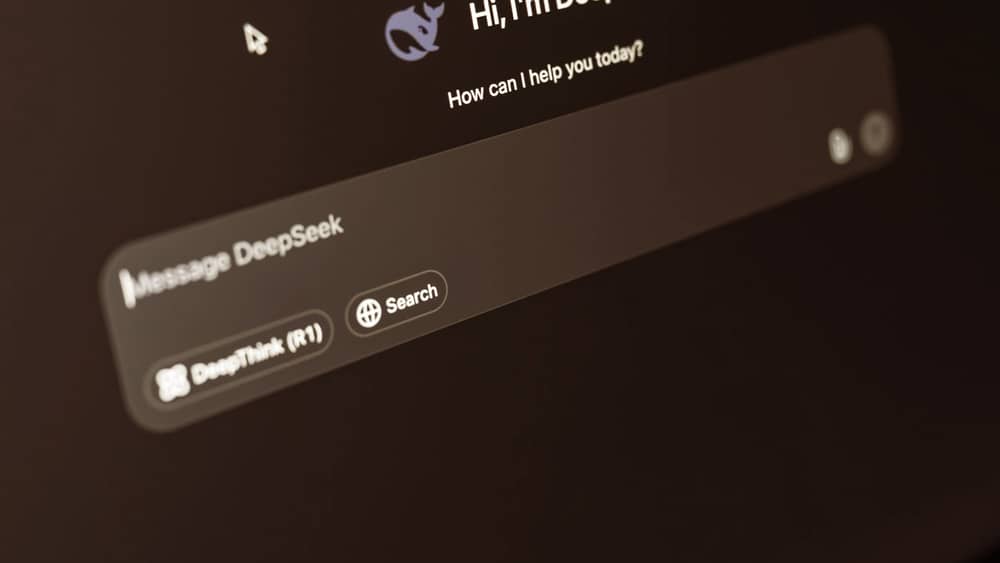
AI Chatbot Development
Customer and employee chatbots that answer from your own documents and data, cite sources and hand over to a human when unsure.
AI Agents & Automation
Agents that complete multi-step tasks across your tools — with guardrails, approval steps and a full log of what they did.
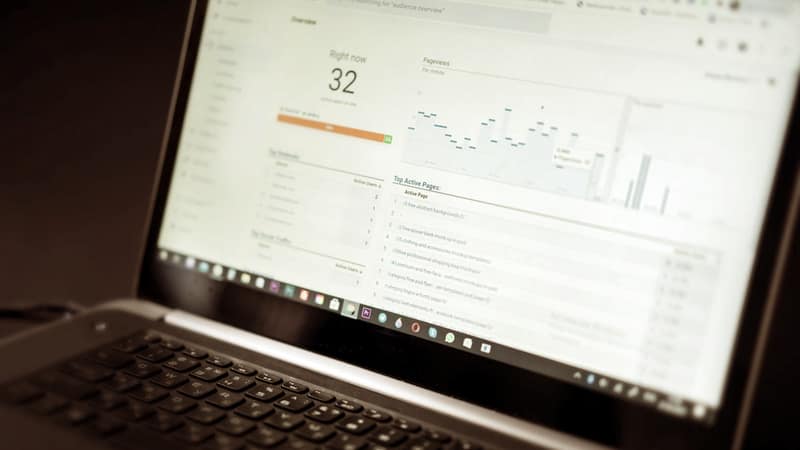
Machine Learning Models
Prediction, forecasting, classification and recommendation models trained on your data, with monitoring and retraining built in.
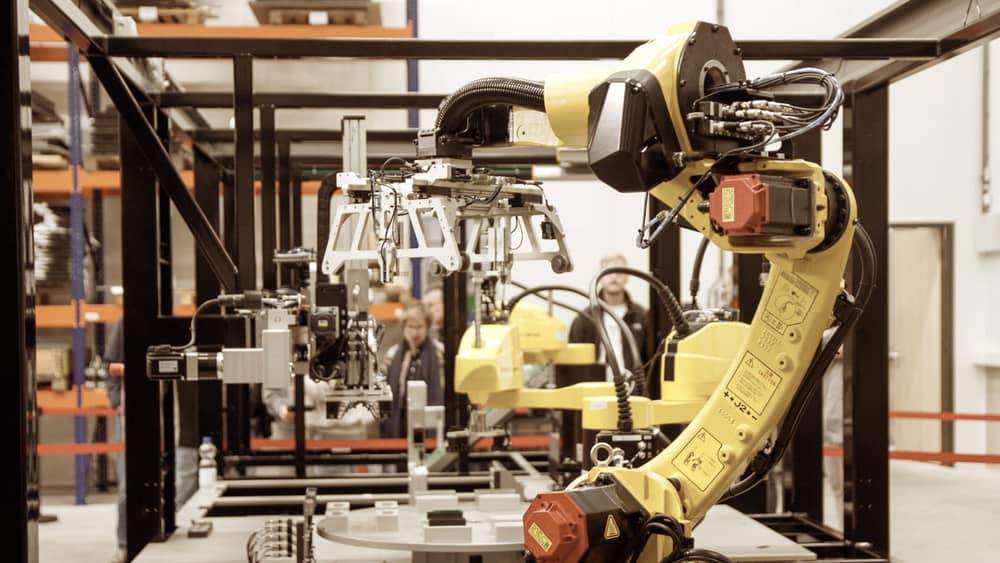
Computer Vision
Inspection, detection, OCR and image classification for documents, products and production lines.

AI Consulting & Strategy
An honest assessment of where AI will pay back in your business, what it will cost per request, and where it should not be used.
Technologies behind our AI systems.
We are model-agnostic: we use frontier models where quality matters most, smaller or open-weight models where cost and privacy matter more, and often both in one system. The engineering around the model — retrieval, evaluation, guardrails, caching and monitoring — is where most AI projects succeed or fail, and it is where we spend most of our effort.
For Seattle projects we typically host on AWS US West (Oregon) or Azure West US 2 in Washington, and integrate with Stripe; Amazon marketplace and fulfilment APIs; Auth0 and Okta; and Segment and Amplitude.
Turning ideas into AI systems that work.
A structured, agile process that keeps your AI development project on time, on budget and visible at every stage.

Problem Framing
We define what a correct answer looks like and how it will be measured before writing code — vague success criteria sink more AI projects than any model choice.
Deliverables: Use-case definition, success metrics, feasibility and cost estimate

Data & Evaluation Set
We gather real examples from your business with expected outputs. This becomes the yardstick every later change is scored against.
Deliverables: Data audit, labelled evaluation set, baseline score

Prototype
The smallest working system that produces a measurable score, usually within two to four weeks, so you know whether the approach works early.
Deliverables: Working prototype, evaluation report, go / no-go recommendation

Production Engineering
Guardrails, fallbacks, caching, cost ceilings, access control and the integrations that connect the AI to your real systems and users.
Deliverables: Production system, security review, cost model
Launch & Monitoring
Released behind a flag to a small group first, with tracing that shows exactly what the system did for every request.
Deliverables: Staged rollout, dashboards, human-review workflow

Continuous Improvement
Failures feed back into the evaluation set, and models or prompts are upgraded only when the score proves the change is better.
Deliverables: Monthly quality report, model and prompt updates
AI Development for Seattle's key industries.
What AI development typically means in the sectors at the centre of the Seattle economy.

SaaS AI Development in Seattle
AI features inside your product: natural-language querying, summaries and copilots, as we built into DeepSync.

E-commerce & D2C AI Development in Seattle
Catalogue enrichment, semantic search, support automation and review summarisation.

Healthcare AI Development in Seattle
Clinical-note summarisation, report explanation for patients and intake triage — always with a clinician in the loop.

Logistics & Supply Chain AI Development in Seattle
Document extraction from invoices and bills of lading, ETA prediction and exception triage.




Products our team has shipped.
Real products, live today, built end to end by the same engineers who would work on your Seattle project.
DeepSync
An AI-powered session replay and behavioural analytics platform that turns raw user sessions into actionable product insights.
- Next.js
- AI / LLM pipelines
- Event streaming
TestGenie
An AI exam-paper generator that produces board-aligned question papers with answer keys in seconds.
- LLM prompt orchestration
- PDF generation
- Next.js
HyperWork
An all-in-one project delivery platform where agencies run their work and give clients a branded, password-protected progress portal.
- Next.js
- PostgreSQL
- Real-time sync
BharatTrips
An end-to-end online travel booking platform covering trip planning and reservations in a single flow.
- Next.js
- Payment gateway integration
- Booking APIs
PetPujaris
A social dining platform for curated group meals, food walks and supper clubs across Mumbai.
- Next.js
- Event & booking system
- Community features
Working with Seattle clients.
Hours and overlap
Seattle is 12.5 to 13.5 hours behind India. We keep a daily overlap in your late afternoon or our early morning, and much of the build happens while you sleep.
Meetings and workshops
Fully remote with a named engineering lead, your chat and repositories, and an agreed daily or twice-weekly sync.
Regulation and data
Washington's My Health My Data Act sets strict rules for consumer health data, HIPAA applies to covered health entities, and SOC 2 is the norm for B2B software. We design for those from the start.
Frequently asked questions.
About AI development in Seattle, and about working with Drema.
Do you have a team in Seattle?
We work with Seattle clients through one named lead who is your point of contact from kickoff to handover, backed by the same engineering team on every project.
Can the AI we build handle the languages and data rules in Seattle?
Current models handle English, Spanish and Chinese well enough for most business tasks, and we measure that on your own examples before committing rather than assuming it. On data handling: Washington's My Health My Data Act sets strict rules for consumer health data, HIPAA applies to covered health entities, and SOC 2 is the norm for B2B software. We design for those from the start. Where sensitivity demands it we deploy into your cloud account in the US West region or use self-hosted open-weight models.
How long does AI development take for a Seattle company?
A prototype scored against your own examples usually lands in two to four weeks — deliberately early, so you know whether the approach works before significant money is spent. Hardening it for production, with guardrails, monitoring and cost controls, typically takes another six to ten weeks.
Which Seattle industries do you build AI systems for?
Most often SaaS, E-commerce & D2C, Healthcare and Logistics & Supply Chain, because that is where Seattle's economy is concentrated. We are not limited to those sectors — the engineering transfers — but that is where we can bring the most relevant experience to a first conversation.
Which local systems can you integrate with?
Most Seattle projects touch Stripe; Amazon marketplace and fulfilment APIs; Auth0 and Okta; and Segment and Amplitude. We integrate with what your customers and staff already use, and we check API access and commercial terms for each before committing to a timeline.
How much does custom AI development cost?
Scope drives the cost far more than the AI does. A focused system on a well-defined problem typically runs a few weeks of engineering; a platform with retrieval, evaluation and multi-model orchestration is a longer engagement. We quote after a scoping call, and we tell you if the problem does not warrant AI at all.
Do you build with your own models or use existing ones?
We use existing frontier and open-weight models for the overwhelming majority of work, because training from scratch is rarely justifiable. The value we add is the retrieval, orchestration, evaluation and guardrails around the model, which is where projects usually fail.
How do you stop the AI from making things up?
Three things in combination: grounding answers in retrieved source content, constraining outputs to structures we validate, and an evaluation suite that catches regressions before release. We also design the interface so the system can say it does not know.
Can you work with our existing data?
Yes, and it is usually the point. We handle ingestion, cleaning, chunking and embedding of your documents, databases and APIs so the system reasons over your material rather than generic training data.
What if our data is confidential?
We work under NDA by default, can deploy into your own cloud account, and can use models with no-training data commitments or self-hosted open-weight models where the sensitivity requires it.
How long before we see something working?
A prototype scored against a real evaluation set typically lands within two to three weeks. That is deliberately early, because it tells us whether the approach is viable before significant money is committed.

Get a free estimate for your AI development project in Seattle.
Tell us what you want to build. A founder will reply with honest advice on scope, timeline and cost — including when a simpler approach would do.